
Under standard driving conditions, a 2026 Subaru Crosstrek requires a professional brake inspection every 12,000 miles or 12 months, and full brake fluid replacement every 30,000 miles or 24 months. Severe driving conditions—including cold winters, salted roads, and stop-and-go commuting—shorten the recommended inspection interval to every 6,000 miles or 6 months. Depending on individual driving habits and daily routes, brake pad replacement is typically necessary between 30,000 miles and 70,000 miles.
Maintaining a routine brake inspection schedule ensures that every component of your stopping system performs reliably across changing New England weather. Regular checks allow factory-trained technicians to measure friction lining thickness, evaluate rotor surface condition, inspect caliper slider pins, and check hydraulic lines for corrosion or leaks. Routine brake care directly impacts active safety systems, ensuring that automatic emergency stopping features react with precision.
Driving habits and seasonal environmental factors heavily influence friction wear on compact crossovers equipped with Symmetrical All-Wheel Drive. Daily stop-and-go commuting along the Route 16 corridor through Medford places continuous thermal stress on front friction pads, accelerating wear compared to long-distance highway travel. Sub-freezing temperatures and heavy road-salt exposure during winter months create corrosive environments where caliper sliders can bind if left unserviced, causing uneven pad wear and reduced pedal responsiveness.
To keep your crossover stopping smoothly year-round, our service team at Cityside Subaru provides complete multi-point brake checks during every routine maintenance visit. You can find our service bay at 790 Pleasant St in Belmont or give our advisors a quick call to confirm your next service milestone.
Table of Contents
- What Type of Brake System Engineering Does the 2026 Subaru Crosstrek Use?
- What Are the Warning Signs of Failing Brakes on a Subaru Crosstrek?
- What Type of Brake Fluid Is Required for the 2026 Subaru Crosstrek?
- How Much Does Crosstrek Brake Service Cost and How Do OEM Pads Compare to Aftermarket Brands?
- Where Can You Get Certified 2026 Subaru Crosstrek Brake Service Near Boston?
- Common Questions About 2026 Subaru Crosstrek Brake Maintenance
What Type of Brake System Engineering Does the 2026 Subaru Crosstrek Use?
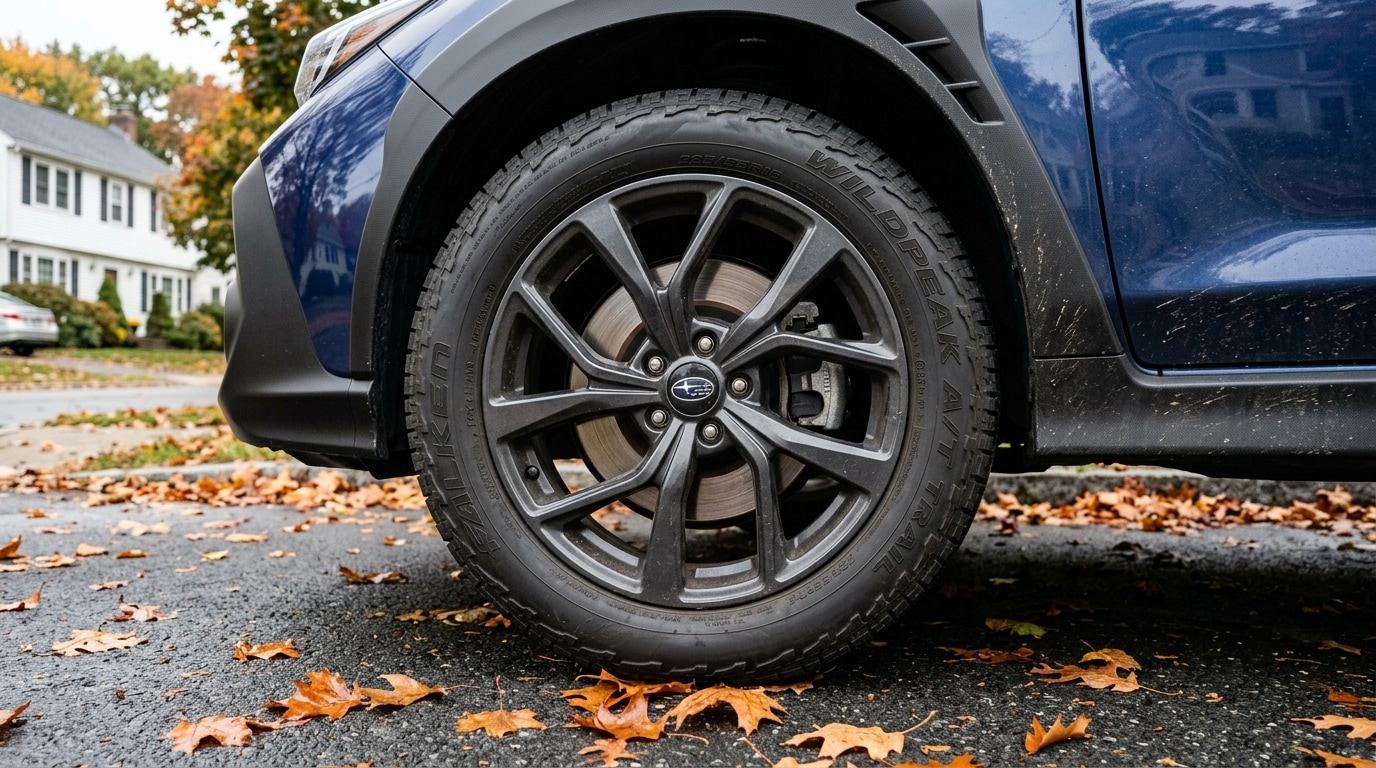
The 2026 Subaru Crosstrek utilizes a 4-wheel power-assisted disc braking system paired with a 4-channel, 4-sensor Anti-lock Braking System (ABS), Electronic Brake-force Distribution (EBD), and Brake Assist. Gas models feature vented front rotors measuring approximately 11.6 inches in diameter on Base and Premium trims, upgraded to 12.4 inches on Sport, Limited, and Wilderness trims to handle elevated thermal loads, matched with 11.2-inch solid rear rotors.
Hydraulic braking force is managed electronically to maintain chassis stability during aggressive decelerations or low-traction stops. Electronic Brake-force Distribution dynamically balances hydraulic pressure between the front and rear axles based on vehicle load and weight distribution. When emergency stopping is detected, Brake Assist instantly increases hydraulic pressure to minimize stopping distance, working directly alongside standard EyeSight Driver Assist Technology to power Pre-Collision Braking.
An Electronic Parking Brake with Auto Vehicle Hold comes standard across the entire lineup, replacing traditional mechanical cables with servo-driven rear caliper actuators. On hybrid model variants, the braking architecture incorporates standard hydraulic disc components with an integrated regenerative braking setup. Deceleration forces use the electric drive motor as a generator to capture kinetic energy and recharge the high-voltage battery before mechanical friction pads engage, extending overall pad life while maintaining pedal feedback.
- Vented Front Rotors: 11.6-inch diameter on Base/Premium; 12.4-inch diameter on Sport, Limited, and Wilderness trims.
- Rear Rotors: 11.2-inch disc diameter engineered for consistent thermal dissipation.
- Control Hardware: 4-channel ABS with Electronic Brake-force Distribution, Brake Assist, and electronic hill-hold functionality.
- Driver Assist Integration: Direct communication with EyeSight Driver Assist Technology sensors for automated emergency braking.
What Are the Warning Signs of Failing Brakes on a Subaru Crosstrek?
Common warning signs of failing brakes on a 2026 Subaru Crosstrek include high-pitched squealing from wear indicators, harsh metallic grinding during deceleration, steering wheel vibration or pulsation under braking, a soft or spongy pedal feel, or an illuminated brake system warning light on the gauge cluster.
Recognizing these symptoms early prevents minor pad wear from turning into costly rotor damage or compromised safety capabilities. High-pitched squealing occurs when the built-in metallic wear sensor contacts the rotor face, alerting the driver that friction material has worn down to approximately 2 millimeters. If left unaddressed, the friction material wears away entirely, causing steel backing plates to grind against cast-iron rotors, creating deep scoring grooves and reducing stopping performance.
Pulsation felt through the steering wheel or brake pedal indicates rotor lateral runout or uneven pad material deposition caused by severe thermal cycles. Spongy pedal response usually signals moisture contamination or air bubbles in the hydraulic brake fluid line, lowering the fluid's boiling point and compromising hydraulic pressure. Because active driver-assist software relies on immediate hydraulic response to perform autonomous pre-collision stops, any change in pedal feel or stopping distance requires prompt professional evaluation.
- High-Pitched Squealing: Mechanical indicator warning that pad lining is approaching minimum safe thickness.
- Metallic Grinding: Steel backing plate contacting rotor face, causing immediate scoring and surface damage.
- Pedal Pulsation: Lateral runout or uneven thermal pad deposits across rotor faces.
- Spongy Pedal Travel: Hydraulic fluid aeration or water contamination lowering fluid boiling point.
- Dashboard Warning Illumination: Low hydraulic fluid level or system pressure fault detected by onboard sensors.
What Type of Brake Fluid Is Required for the 2026 Subaru Crosstrek?
The 2026 Subaru Crosstrek requires standard FMVSS No. 116 DOT 3 or DOT 4 glycol-based hydraulic brake fluid to operate its braking system. Factory specifications require a complete brake fluid flush and exchange every 30,000 miles or 24 months to remove accumulated moisture and maintain fluid boiling performance.
Glycol-based hydraulic fluid is hygroscopic, meaning it absorbs moisture directly from surrounding humidity over time. Water contamination lowers the fluid's dry boiling point from roughly 400 degrees Fahrenheit down toward its wet boiling point, creating vapor pockets under heavy thermal stress that cause pedal fade. Excess water content also accelerates internal oxidation across steel hydraulic lines, ABS valve blocks, and caliper piston bores.
Daily city driving and dense traffic along Beacon Street in Brookline subject hydraulic fluid to frequent heating and cooling cycles. Routine fluid testing checks moisture concentration and pH levels, protecting internal anti-lock braking actuators from corrosion. Replacing fluid at recommended interval limits preserves pedal firmness and maintains immediate hydraulic response during sudden stopping maneuvers.
How Much Does Crosstrek Brake Service Cost and How Do OEM Pads Compare to Aftermarket Brands?
Complete brake service for a Subaru Crosstrek in the Greater Boston area typically costs between $300 and $850 per axle, depending on whether the service requires replacement of friction pads alone or includes full rotor replacement and hardware servicing. Genuine OEM Subaru brake components are engineered to match exact factory noise, vibration, and thermal specifications, whereas aftermarket alternatives vary significantly in pad hardness, dust generation, and anti-squeal performance.
When inspecting wear items during routine visits, technicians measure remaining friction material thickness to recommend timely replacement before backing plates touch rotor surfaces. Genuine OEM pads feature specialized ceramic friction compounds, pre-attached backing shims, and exact mechanical dimensions that align with factory caliper brackets. Generic aftermarket pads from brands like Akebono, Wagner, or Centric offer alternative friction characteristics, but harder aftermarket compounds can increase rotor wear or generate unwanted squeal on cold mornings.
| Component / Feature | Genuine OEM Subaru Brake Components | Typical Aftermarket Alternatives |
|---|---|---|
| Friction Formulation | Factory-matched ceramic compound engineered for BOXER weight balance | Generic ceramic or semi-metallic compounds |
| Noise & Vibration | Custom anti-squeal dampening shims tuned for Crosstrek calipers | Universal shims requiring manual fitment modifications |
| Rotor Metallurgy | High-carbon cast iron matching original heat dissipation rates | Variable iron quality prone to quicker thermal warping |
| System Compatibility | Calibrated for exact EyeSight Driver Assist Technology stopping profiles | Unverified stop rates across automated emergency braking cycles |
Using genuine components ensures predictable stopping distances and maintains factory warranty protection across every axle service. Drivers can conveniently schedule a service appointment online or order genuine Subaru parts directly through our dedicated counter.
Where Can You Get Certified 2026 Subaru Crosstrek Brake Service Near Boston?
Certified 2026 Subaru Crosstrek brake service is available at Cityside Subaru in Belmont, where factory-trained technicians utilize specialized SSM4 diagnostic software, OEM parts, and factory-calibrated procedures. Servicing your crossover at an authorized dealership guarantees that every mechanical repair meets strict engineering guidelines and keeps active safety features properly aligned.
Servicing modern braking systems involves more than swapping mechanical hardware. Following front rotor or caliper replacement, technicians use specialized tools to verify sensor alignments so that driver-assist features communicate accurately with ABS control modules. General repair shops using non-proprietary scan tools often cannot perform module sensor re-learns or verify factory firmware updates during routine pad changes.
Our service department maintains transparent pricing and direct access to factory recall databases, ensuring complete documentation for your vehicle's ownership history. To review seasonal maintenance savings before scheduling your visit, explore our current service and parts special offers.
Common Questions About 2026 Subaru Crosstrek Brake Maintenance
Q: How does regenerative braking affect brake pad wear on 2026 Crosstrek Hybrid models?
Regenerative braking on hybrid models uses the electric motor to slow the vehicle, capturing kinetic energy to recharge the high-voltage battery. Because mechanical disc brakes only engage during firmer decelerations or coming to a complete stop, friction pad wear is significantly reduced compared to standard gas models. However, hybrid disc rotors still require periodic inspections to ensure slider pins remain lubricated and rotor surfaces stay free of corrosion caused by road salt exposure.
Q: Can worn brake pads cause the Subaru EyeSight system to disable?
Worn brake pads themselves do not directly generate an electronic fault code within the EyeSight system. However, as brake pads wear down, caliper pistons extend farther to compensate, causing hydraulic fluid levels in the master cylinder reservoir to drop. If fluid levels fall below the minimum threshold, the red brake system warning light illuminates, which automatically disables EyeSight Driver Assist Technology features like adaptive cruise control and pre-collision braking until fluid levels and pad thickness are restored.
Q: Should I resurface or replace my Crosstrek brake rotors during a pad change?
Brake rotors should be measured with a digital micrometer during every pad replacement to check against minimum factory discard thickness specifications. If rotor thickness is well above the minimum threshold and surface scoring is minor, resurfacing on a precision lathe restores a smooth, parallel friction face. If rotors fall below minimum thickness limits or exhibit severe heat checking, complete replacement is required to maintain proper heat dissipation and prevent warping.
Q: What is the Subaru Roadside Assistance phone number for emergency brake issues?
If you experience sudden brake pedal loss, severe hydraulic leaks, or unexpected mechanical lockup while driving, pull safely off the road and contact Subaru Roadside Assistance: 1-800-261-2155. Roadside assistance coverage is included with your new vehicle warranty, providing towing transport directly to an authorized retailer service facility.
Q: Does riding the brakes during steep downhill mountain drives damage Crosstrek rotors?
Continuous light pressure on the brake pedal during long downhill descents generates excessive friction heat, causing thermal glazing on brake pad surfaces and rotor heat spots. Glazed pads lose their friction coefficient, resulting in pedal fade and reduced stopping capability. To avoid thermal damage, drivers should shift the Lineartronic CVT into manual paddle-shift mode or use lower gear ratios to utilize engine braking when descending steep grades.
To keep your crossover performing at its best through every New England season, trust the factory-trained service team at Cityside Subaru. You can find our facility at 790 Pleasant St in Belmont or give our service department a quick call to book your complete brake system inspection today.
© 2026 Cityside Subaru. All rights reserved.