
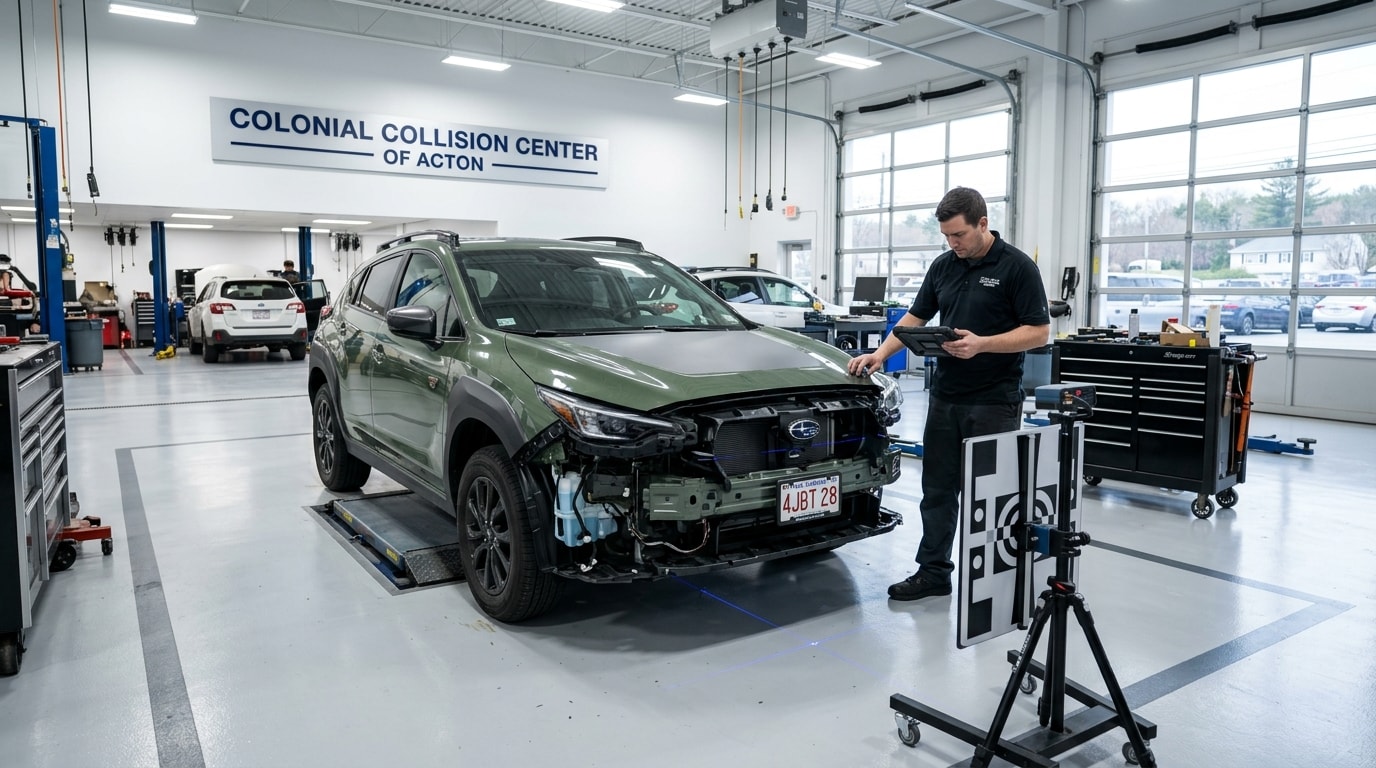
Selecting a collision repair shop requires verifying I-CAR Gold Class certification, confirming the facility utilizes original equipment manufacturer ( OEM) repair procedures, and validating that structural repairs, sensor calibration, and refinishing carry a written lifetime warranty. Prioritize facilities that perform a full teardown before finalizing collision estimates to ensure all hidden structural and electronic damage is identified accurately up front.
Evaluating repair facilities goes far beyond scanning online star ratings. A thorough quality audit centers on technical capabilities and repair discipline:
- Shop and Technician Certifications: Look for shop-wide I-CAR Gold Class recognition along with individual I-CAR Platinum technician credentials and paint manufacturer refinish certifications.
- OEM Procedure Adherence: Confirm the shop pulls official manufacturer repair guidelines for every job to determine precise weld placements, sectioning limits, and structural adhesive requirements.
- Pre-Estimate Teardown Practice: Ensure technicians disassemble damaged areas prior to issuing a final estimate, preventing mid-repair surprises and delays.
- ADAS Calibration Capabilities: Verify the facility performs and documents diagnostic scans and target calibrations for advanced driver-assistance systems.
- Written Lifetime Warranty: Require a comprehensive written warranty covering workmanship, structural repairs, and paint refinishing for as long as you own the vehicle.
In busy suburban corridors around Medford, where navigating daily stop-and-go traffic along river routes and tight rotaries frequently leads to low-speed fender benders, structural integrity and bumper sensor precision are essential. Modern body panels hide complex crash boxes and radar units designed to absorb impact energy and trigger safety alerts.
When you need an estimate or structural assessment, you can find our Belmont facility address conveniently located for quick drop-offs, or start the process by giving our team a quick call to discuss claims handling.
Table of Contents
- Does Massachusetts Law Let You Choose Your Own Collision Repair Shop and Demand OEM Parts?
- What Is the Difference Between Dealer Collision Centers and Independent Body Shops?
- What Are Average Hourly Labor Rates for Body Shops in Eastern Massachusetts?
- How Do Collision Centers Safely Restore Unibody Frame Alignment and ADAS Sensors?
- Frequently Asked Questions About Collision Repair
- Schedule Certified Collision Care and Estimates at Cityside Subaru
Does Massachusetts Law Let You Choose Your Own Collision Repair Shop and Demand OEM Parts?
Under Massachusetts General Laws Chapter 90, Section 34O, vehicle owners possess the unconditional legal right to select any licensed collision repair shop, regardless of insurance company recommendations or direct-repair network lists. Insurance carriers cannot force you to accept non-original aftermarket components if your vehicle lease mandates OEM parts, or if your policy includes an optional OEM parts endorsement rider.
Massachusetts insurance regulations mandate clear transparency during the damage appraisal process:
- Right to Choose Repairer: Insurance adjusters may suggest network preferred shops, but they cannot legally mandate where your vehicle is repaired.
- Itemized Appraisals: State law requires a written, line-by-line appraisal detailing all labor operations, paint supplies, and specific part types (OEM, aftermarket, or reconditioned).
- Appraisal Copies: Insurers must provide you with a full copy of the official damage appraisal used to establish claim payouts.
- Parts Rights and Lease Requirements: If your vehicle is leased, leasing contracts strictly require factory original components to maintain structural compliance and avoid turn-in penalties.
While insurance companies frequently push imitation or generic aftermarket sheet metal to reduce claim costs, non-OEM panels may lack original stamping tolerances, corrosion protection coatings, and precise crumple zone behavior. For modern vehicles equipped with EyeSight Driver Assist technology, installing non-factory windshields, front grilles, or bumper covers can disrupt camera angles and radar sensor wave transmission.
Maintaining factory specifications protects active safety systems and long-term resale value. Drivers seeking routine component checks or specialized repair planning can conveniently take advantage of scheduling a collision repair appointment online, ensure strict component accuracy when ordering genuine Subaru parts, or explore current savings by viewing our service and parts special coupons.
What Is the Difference Between Dealer Collision Centers and Independent Body Shops?
Dealer collision centers specialize in brand-specific structural engineering, utilizing factory-trained technicians, factory diagnostic tooling, and direct access to OEM parts databases. Independent body shops service a wide range of makes and models using generalized repair workflows and a mix of aftermarket, reconditioned, or recycled components.
Comparing facility types highlights distinct operational approaches:
| Feature / Capability | Dealer Collision Centers | Independent Body Shops |
|---|---|---|
| Technician Training | Factory-certified & specialized brand training | General multi-brand collision training |
| Parts Utilization | 100% genuine OEM parts standard | Mix of aftermarket, reconditioned, & OEM |
| Diagnostic Equipment | Factory scan tools & proprietary software | Universal multi-brand diagnostic scanners |
| ADAS Calibration | Factory target boards & vehicle-specific routines | Subcontracted or universal static setup |
| Structural Data Access | Direct factory blueprints & updates | Generalized third-party repair databases |
Specialized equipment matters when repairing modern unibody structures engineered with ultra-high-strength steel ( UHSS) and composite materials. A brand-focused facility understands exact heat thresholds and sectioning procedures required to preserve safety cages. Independent facilities often provide broad convenience for older vehicles, but complex modern architectures benefit from specialized factory care.
For broader regional repair resources and structural standards, drivers can review regional collision center resources to compare facilities and repair certifications.
What Are Average Hourly Labor Rates for Body Shops in Eastern Massachusetts?
Collision body labor rates in eastern Massachusetts typically range from $60 to $110 per hour for standard sheet metal and refinishing work. Specialized mechanical repairs, high-voltage electric vehicle systems, and complex aluminum structural straightening command higher rates between $120 and $180 per hour.
Labor charges on a formal collision appraisal reflect several specialized disciplines:
- Sheet Metal / Body Labor: Covers panel straightening, component removal, structural alignment, and panel fitting.
- Refinish / Paint Labor: Includes surface prep, priming, color matching, clear coat application, and post-paint polishing.
- Frame / Structural Labor: Applies to computerized 3D laser measuring and hydraulic pull towers needed to realign unibody frames.
- Mechanical Labor: Encompasses suspension replacement, engine cradle realignment, steering gear service, and cooling system repairs.
- Diagnostic & ADAS Labor: Involves pre-repair diagnostic trouble code scans, post-repair clearing, and sensor target calibration.
Navigating dense commercial corridors in Brookline, where narrow streets and tight parallel parking spots increase the risk of side-mirror strikes, door dings, and bumper scrapes, often brings drivers to collision counters for localized body work. Detailed line-item estimates separate labor hours from paint material costs, ensuring complete clarity before insurance claim authorization.
How Do Collision Centers Safely Restore Unibody Frame Alignment and ADAS Sensors?
Collision technicians restore bent unibody frames using computerized 3D laser measuring systems paired with hydraulic pull towers that align chassis coordinates back to factory millimeter tolerances. Safety restoration requires follow-up electronic scanning and target calibration for ADAS equipment, including radar sensors and windshield-mounted cameras.
Structural restoration follows a precise engineering sequence:
- Pre-Repair Electronic Scan: Technicians plug into the diagnostic port to read historical trouble codes and evaluate active safety system faults.
- 3D Laser Chassis Measurement: Ultrasound or laser targets measure specific X, Y, and Z chassis coordinates against original factory blueprints.
- Controlled Hydraulic Pulling: Hydraulic frame machines apply incremental tension to restore deformed unibody rails without compromising metal strength.
- Component Replacement & Welding: Damaged high-strength steel sections are replaced using factory-specified spot welds and structural adhesives.
- Static and Dynamic ADAS Calibration: Technicians place precision target boards at exact distances and perform test drives to align cameras and radar units.
Drivers visiting for an estimate after a collision frequently ask whether radar sensors and cameras require target re-calibration before the vehicle is returned. Because even a one-degree shift in a front radar bracket or camera mount projects off-target by several feet at highway speeds, physical alignment and electronic calibration must always be completed together.
Frequently Asked Questions About Collision Repair
Q: What does I-CAR Gold Class certification mean for a body shop?
I-CAR Gold Class certification indicates that a collision repair facility maintains continuous annual training for all its technicians, estimators, and structural specialists. Only about 10% of collision repair shops nationwide achieve this credential, which verifies expertise in modern high-strength steels, advanced joining techniques, structural welding, and modern vehicle electronics.
Q: What should I bring to a body shop estimate appointment?
Bring your vehicle (or clear high-resolution photos if non-drivable), your insurance claim number, insurance adjuster contact information, and your vehicle registration. If you have received prior paperwork or competitor estimates, bringing those documents allows the estimator to compare line items, identify missed repair operations, and explain structural requirements clearly.
Q: Should I ask for written OEM repair procedures before work begins?
Yes, requesting printed OEM repair procedures ensures the facility follows manufacturer instructions for weld counts, structural sectioning locations, and adhesive application. Verifying these documents before metal is cut or welded guarantees the repair matches factory crash-test standards rather than generic shop guesswork.
Q: What happens if hidden damage is discovered after teardown?
When technicians disassemble damaged body panels and discover hidden mechanical or structural damage, the shop documents the findings with digital photos and prepares an insurance supplement. The estimator submits this supplemental estimate directly to your insurance company for approval before proceeding with the additional repairs.
Q: How does paint blending ensure an exact color match across panels?
Paint blending involves applying fresh color onto the repaired panel and gradually feathering the paint into adjacent original panels before clear-coating the entire area. Because factory finishes age under sun exposure and metallic flakes align differently during application, blending prevents visible shade variations between new and original body panels.
Schedule Certified Collision Care and Estimates at Cityside Subaru
Restoring your vehicle after an accident requires certified structural precision, original components, and calibrated driver-assist safety technology. Our team provides detailed damage appraisals, insurance claim coordination, and complete collision repair services tailored to your vehicle's factory standards.
Whether you need minor paint refinishing, glass replacement, or structural frame alignment, our certified technicians ensure every repair meets rigorous safety criteria. We work directly with insurance adjusters to streamline appraisals, secure original components, and complete necessary electronic system scans.
To review your repair options or set up an initial damage assessment, consider finding our service facility in Belmont for a walk-through of your vehicle, or start your claim by contacting our team directly to speak with a collision specialist today.
© 2026 Cityside Subaru. All rights reserved.